Friday, May 17, 2019

State Library and Archives Celebrates Statehood Day with Original Constitutions and Special Lecture

Tennessee celebrates its 223 birthday Saturday, June 1! The Tennessee State Library and Archives will put all three of the state’s original constitutions on display to the public in commemoration of Statehood Day. The constitutions are typically protected in a vault, but all three versions will be in the Library and Archives’ lobby for viewing May 30 to June 1 from 8 a.m. to 4:30 p.m. CDT.


As part of the celebration, the Library and Archives will also host a free lecture on Tennessee’s constitutional history. On June 1 the Honorable Judge Andy D. Bennett of the Tennessee Court of Appeals will present the history of each of Tennessee’s constitutions. Patrons can expect to learn details about the historical documents and what they meant for Tennesseans during that time in history.

"I'm thrilled the Library and Archives will again display our three state constitutions during the Statehood celebration, said Secretary of State Tre Hargett. "We're honored to have Judge Bennett join in the festivities for a lecture on the purpose of these documents, the impact they had on the earliest settlers of Tennessee and how they continue to influence state lawmaking today."

Before joining the Court of Appeals in 2007, Judge Bennett served in the Tennessee Attorney General’s office for 25 years, the last ten as Chief Deputy. He was a member of the Board of Directors of the Tennessee Bicentennial Foundation, 1993-1997, which put together the festivities for Tennessee’s Bicentennial celebration. Besides being a member of the Tennessee Bar Association, Judge Bennett is a past president and the current president-elect of the Tennessee Supreme Court Historical Society, and is the current president of the Tennessee State Library and Archives Friends organization. He has authored several legal and historical articles and received numerous awards during his distinguished career. Judge Bennett also helped create the Tennessee Judiciary Museum in 2012. He has had a long interest in the Tennessee Constitution, not only lecturing about it, but litigating about it as well.

The lecture will take place from 9:30 a.m. to 11 a.m. CDT Saturday, June 1, in the Library and Archives auditorium. The Library and Archives is located at 403 Seventh Ave. N., directly west of the Tennessee State Capitol in downtown Nashville. Free parking is available around the Library and Archives building.

Although the lecture is free and open to the public, registration is required due to seating limitations in the auditorium. To reserve seats, please visit https://tnstatehood2019.eventbrite.com.

Viewing the state constitutions is free. No reservation is required.


The Tennessee State Library and Archives is a division of the Office of Tennessee Secretary of State Tre Hargett

Monday, April 22, 2019

Library and Archives Hosts Free Workshop on Civil War Research

The Civil War has touched the life of almost every U.S. citizen but connecting families with complete records can present challenges. On Saturday, May 4, the Tennessee State Library and Archives will host a free workshop entitled, “Cross Connections to the Civil War.”

Presenter J. Mark Lowe will demonstrate how to search and use the wide variety of records available through the Tennessee State Library and Archives – including records from the Grand Army of the Republic, United Confederate Veterans, United States Colored Troops, Confederate and Union Army pensions, Southern Claims Commission, court martials, newspaper accounts, unit histories, letters to governors and presidents, diaries and more. Participants can expect to leave with knowledge and tools to draw a more complete picture of their Civil War ancestor and family history.

J. Mark Lowe, CG, FUGA, is a certified genealogist who has been researching family history for more than 50 years. Lowe is a renowned author and lecturer specializing in original records and manuscripts throughout the South. He grew up in Tennessee but has extensive family roots in Kentucky. He has traveled both states and enjoys sharing his love of genealogy and the joy of research with others.

Lowe has served as president of the Association of Professional Genealogists and is past president of the Friends of the Tennessee State Library and Archives. His expertise has been featured on several genealogical television series including African American Lives 2 (PBS), Who Do You Think You Are? (TLC) and Follow Your Past (Travel).

The workshop will be held from 9:30 a.m to 11 a.m. CDT Saturday, May 4, in the Library and Archives auditorium. The Library and Archives is located at 403 Seventh Ave. N., directly west of the Tennessee State Capitol in downtown Nashville. Free parking is available around the Library and Archives building.

Although the workshop is free and open to the public, registration is required due to limited seating. To make a reservation, visit https://crossconnections.eventbrite.com.


The Tennessee State Library and Archives is a division of the Office of Tennessee Secretary of State Tre Hargett

Thursday, April 11, 2019

Meet the Staff - Debra Mattingly

Meet Debra Mattlingly. She is the Assistant Director with the Clinch River Regional Library.

How long have you worked here?

I’ve worked for the Clinch River Regional Library since January 2016. In the previous 37 years, I worked in business, academic and public libraries in Texas, Illinois, North Carolina, Colorado, Tennessee, Maryland and Florida. I love all types of libraries. I also really love Tennessee, so we returned when we had the chance 3.5 years ago.

What are some of the things you do as an Assistant Director? 

As an Assistant Director of one of the 9 regional libraries across the state, I think of my job as a librarian to librarians. I work with 33 libraries in 9 counties, primarily providing support and training to the staff in these libraries. I attend board meetings, prepare and present training, and encourage libraries to continue to improve their good work in their communities. I work on reports that libraries can use to advocate for more funds from their local funding bodies or that provide more ideas for them to use in their communities. I miss the day to day interaction with the general public from my previous positions, but I love what I am doing now.

What is your favorite part of your job?

Meeting and working with all the wonderful people in Tennessee libraries is the favorite part of my job. The library staffs in our 33 libraries and the other assistant directors across the state are fabulous colleagues with whom to work and from whom I am continually learning.


Do you have a favorite collection?

My favorite collection at the Library and Archives is the Library for Accessible Books and Media. What’s not to like in a free library program of recorded, large print, and braille materials that is available to all ages of residents of Tennessee who are not able to use standard print materials due to visual or physical disabilities? I encourage all of our libraries to become familiar with their services and share with their communities. I especially like the quarterly Adult Book Club and the children’s programs offered to eligible participants. Children are mailed the craft materials in advance so everyone can participate in a story and craft, no matter where they live in Tennessee.

What makes libraries and archives relevant to modern society?

Libraries and archives are one of the few places in our society which serves ALL ages, races, creeds, religions, political affiliation, and economic status. Everyone who abides by our rules and policies are welcome to enjoy free materials, programs, research assistance, internet access, or just a place to BE either alone or with others. Libraries offer materials in many formats to meet the educational and recreational needs to those in their communities, from birth until death.


The Tennessee State Library and Archives is a division of the Office of Tennessee Secretary of State Tre Hargett

Tuesday, April 9, 2019

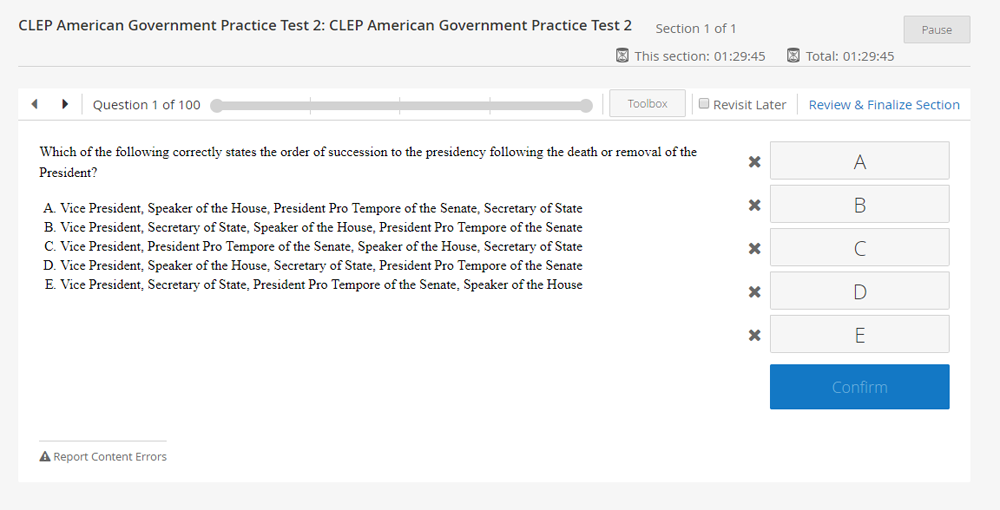
Beyond High School – Using TEL’s Testing & Education Reference Center to Practice for AP/CLEP and Career Tests

By Andrea Zielke

High school students: You may have already decided on what you are doing after graduation from high school, but there are a number of things that you can do now to get you off to a great start at college or your entry into the working world! The Tennessee Electronic Library has a number of free resources that can get you ready!

Most schools will give you credit for Advanced Placement (AP) classes and College-Level Examination Program (CLEP). If you want to do some extra practice in preparation for those exams, check Testing & Education Reference Center (TERC). Every credit earned through AP and CLEP scores can help to reduce the amount of general credits and can help to get you started on the classes in you want to take. Take some time to go through the practice tests so you know what to expect when you take the tests.


Through TERC, you can find two practice exams and study guides for 19 different AP exams.


  • Advanced Placement (AP) Biology 
  • Advanced Placement (AP) Calculus AB 
  • Advanced Placement (AP) Calculus BC 
  • Advanced Placement (AP) Chemistry 
  • Advanced Placement (AP) English Language and Composition 
  • Advanced Placement (AP) English Literature and Composition 
  • Advanced Placement (AP) European History 
  • Advanced Placement (AP) Human Geography 
  • Advanced Placement (AP) Macroeconomics 
  • Advanced Placement (AP) Microeconomics 
  • Advanced Placement (AP) Physics 1 
  • Advanced Placement (AP) Physics 2 
  • Advanced Placement (AP) Physics C 
  • Advanced Placement (AP) Psychology 
  • Advanced Placement (AP) Spanish 
  • Advanced Placement (AP) Statistics 
  • Advanced Placement (AP) U.S. Government and Politics 
  • Advanced Placement (AP) U.S. History 
  • Advanced Placement (AP) World History


For the CLEP exams, you can take four practice exams for each of the 30+ exams available:


  • CLEP American Government Practice Tests 
  • CLEP American Literature Practice Tests 
  • CLEP Analyzing and Interpreting Literature Practice Tests 
  • CLEP Biology Practice Tests 
  • CLEP Business Law Practice Tests 
  • CLEP Calculus Practice Tests 
  • CLEP Chemistry Practice Tests 
  • CLEP College Algebra Practice Tests 
  • CLEP College Composition Practice Tests 
  • CLEP College Mathematics Practice Tests 
  • CLEP English Literature Practice Tests 
  • CLEP Financial Accounting Practice Tests 
  • CLEP French Practice Tests 
  • CLEP Human Growth & Development Practice Tests 
  • CLEP Humanities Practice Tests 
  • CLEP Information Systems Practice Tests 
  • CLEP Introduction to Educational Psychology Practice Tests 
  • CLEP Introductory Psychology Practice Tests 
  • CLEP Introductory Sociology Practice Tests 
  • CLEP Natural Sciences Practice Tests 
  • CLEP Pre-Calculus Practice Tests 
  • CLEP Principles of Macroeconomics Practice Tests 
  • CLEP Principles of Management Practice 
  • CLEP Principles of Marketing Practice Tests 
  • CLEP Principles of Microeconomics Practice Tests 
  • CLEP Social Sciences and History Practice Tests 
  • CLEP Spanish Language Practice Tests 
  • CLEP U.S. History I Practice Tests 
  • CLEP U.S. History II Practice Tests 
  • CLEP Western Civilization I Practice Tests 
  • CLEP Western Civilization II Practice Tests


Beyond AP and CLEP assistance, there are e-books for the LSAT, GMA, GRE, HiSET, TOEFL and US Citizenship exams.

If you are going directly into working world, there are still a number of practice tests and e-books available that can help you start your career. This includes practice tests/ and e-books for the following professions: accountant/auditor, American Foreign Service officer, corrections officer, cosmetology, medical assisting, nursing, pharmacy technician, police officer, postal worker, military, civil service caseworker, court officer, firefighter, parole officer, teachers, probation officers, real estate, state trooper and U.S. Border Patrol.

To take a practice exam or read an e-book, you will need to sign up for a TERC account, which is free for all Tennesseans. Go to Testing & Education Reference Center on TEL to start practicing today!


The Tennessee State Library and Archives is a division of the Office of Tennessee Secretary of State Tre Hargett

Friday, April 5, 2019

From a Circuit Rider’s Home to a Tennessee Century Farm: The Story and Legacy of Isaac Conger’s Beech Lawn Farm

By Dr. Kevin Cason

During the early 1800s, Tennessee was still in its early stages of development. As people began to establish new communities and lives in the newly created state, religious denominations began to filter into the new frontier. For Methodists, the most effective way to grow the denomination and establish new members was to have circuit riders who traveled to different places to preach. The system of having circuits was ideally suited for Tennessee’s scattered population during the 1800s. A circuit involved as much as 500 miles and took five to six weeks for a minister to cover. The services were held in a variety of places including cabins, sheds, taverns, and even in the outdoors under trees.

Circuit Rider, Harper's Weekly, October 1867.


One of these circuit riders was Isaac Conger who established a homestead in present day Lincoln County in the 1800s. At the time Isaac obtained the land grant for his property in 1808, the land was still part of Bedford County, Tennessee. After obtaining the initial 152.5 acres of land, Conger continued to obtain more land adjacent to the property. According to land grant records, from 1818 through 1827, Conger gradually purchased land and eventually accumulated 1,000 acres. Initially, Conger built a small stone cabin on the property as a place of residence. However, he soon turned his attention to building a two-story Federal style brick house for his wife and family.

Isaac Conger Land Grant, Book Y, page 484, Grant #1905
Record Group 50, Land Grants, Tennessee State Library and Archives


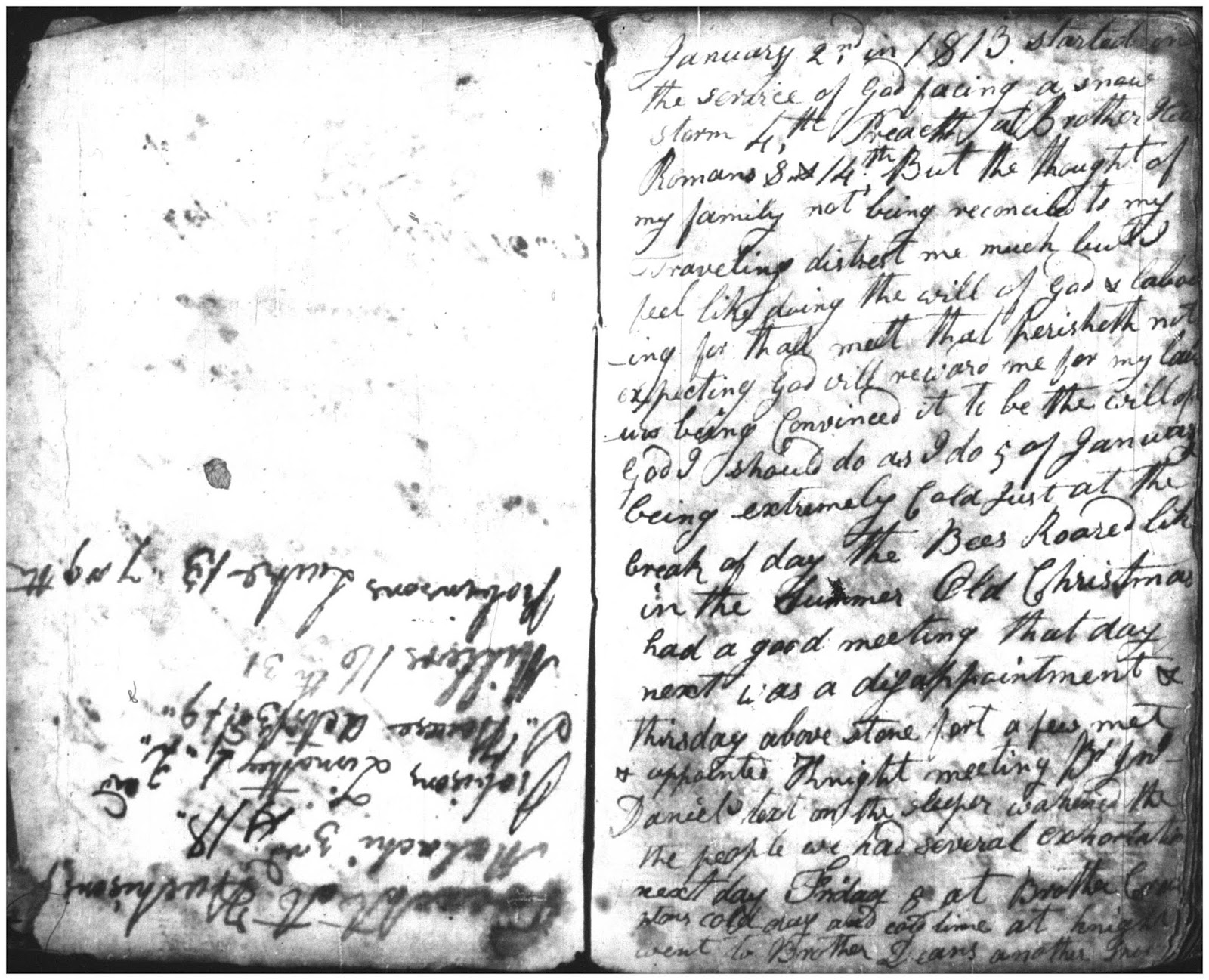
While he was busy with his farm and building his house, Conger also served as a Methodist circuit rider. Conger’s circuit included rounds through Lincoln, Bedford, Moore and Coffee counties in Tennessee. At the Tennessee State Library and Archives, Isaac Conger’s diary provides his personal thoughts and experiences as a circuit rider preaching the gospel to various communities while also enduring long travels and different types of weather.

Isaac Conger Diary, 1813, page 1.
Tennessee State Library and Archives


As a result of the circuit riders like Isaac Conger, the Methodist movement grew and many churches were established in Tennessee. Eventually, William McKendree, Bishop of the Western Conference of the Methodist Church, and Francis Asbury devised a plan to make a general governing organization in Tennessee. In 1812, they officially created the Tennessee Conference of Methodists.

As time moved along, the legacy of Isaac Conger continued as his land, farm and house were passed through several generations. The founders’ only surviving child, Sion Moores Conger, inherited the farm in 1847. In the 1880s, two of Sion’s sons, Dixie and Charles bought out the farm’s heirs and created a stock farm of selling mules, cattle, sheep and hogs. In 1911, Charles died and Dixie continued the farm. In 1929, Dixie’s son John Beall Conger joined him as partner. The father and son continued to work the land together until Dixie’s death in 1953. After Dixie’s death, John Beall Conger continued to manage and live on the farm.

During the 1970s, the farm and homestead received other notable recognitions. In 1973, the “Isaac Conger House” was listed on the National Register of Historic Places for its architectural significance and for its historical connection to Isaac Conger. In 1976, the farm received another distinction by becoming an official Tennessee Century Farm. This program honors farms that have remained in the same family and have had continuous agricultural production for 100 years or more. The “Family Land Heritage-Century Farms” program was established by the Tennessee Department of Agriculture as a way to celebrate the nation’s bicentennial in 1976. Farmers were asked to fill out applications that told the history of their farm and provide documentation that proved the continuous ownership of their farm. In 1979, the 637 farm files that included the Conger’s Beech Lawn Farm were loaned from the Tennessee Department of Agriculture to the Tennessee State Library and Archives for microfilming. Eventually, the microfilmed files became State Record Group 62 and part of the Library and Archives microfilm collection.

Beech Lawn Farm, Lincoln County.
Record Group 62, Tennessee Century Farms Microfilm Collection. Tennessee State Library and Archives


Today, the farm that was established by Isaac Conger continues to remain in the family and serves as a reminder of the important agricultural legacy of farm families who have continuously owned and farmed their land for at least 100 years. The farmhouse that was built by Isaac Conger also serves as a significant historical landmark for a notable figure that felt a calling to spread the religious word to people in frontier Tennessee.

Isaac Conger House present day view on Beech Lawn Farm, Lincoln County, Tennessee.
Clipping from Conger Vertical File. Tennessee State Library and Archives


For more related to this topic see:


  • Isaac Conger Diary, Tennessee State Library and Archives.
  • Herman A. Norton, Religion in Tennessee, 1777-1945 (Knoxville: University of Tennessee Press, 1981).
  • Carroll Van West, Tennessee Agriculture: A Century Farms Perspective. Nashville: Department of Agriculture, 1986.


The Tennessee State Library and Archives is a division of the Office of Tennessee Secretary of State Tre Hargett

Tuesday, March 19, 2019

Women’s History Month—A Photo Essay of Tennessee Women

By Beth Cavanaugh

Every year, the month of March is recognized as “Women’s History Month.” At the Tennessee State Library and Archives, women’s papers including diaries, journals, and letters comprise a significant part of our collections. There are numerous documents relevant to Women’s Studies at the local, state, and national levels which cover subjects such as military, suffrage, journalism, politics, and social life. In 1987, Congress expanded National Women’s History Week to a month, and it has issued a resolution every year since then proclaiming March to be Women’s History Month. While recognition of Women’s History Month is a fairly recent phenomenon, the important historical contributions made by women have been chronicled for many years. Many photos at the Library and Archives tell the story of these contributions and their impact on Tennessee and the world.

Carrie Chapman Catt was a field organizer with Susan B. Anthony, and founded the League of Women Voters. Catt’s leadership was a key factor in Tennessee becoming “The Perfect 36,” the last state needed to ratify the 19th Amendment giving women the right to vote. This undated photograph is by Bachrach Studios and is part of the League of Women Voters of Tennessee Papers, 1920-1989.


Anne Dallas Dudley, a native Nashvillian, was a national and state leader in the fight for women's suffrage who worked tirelessly to secure the ratification of the 19th Amendment in Tennessee. This picture of Dudley reading with her children, Trevania and Guilford, Jr., was used in women's suffrage publicity materials to counter the stereotypes of suffragists as mannish radicals intent on destroying the American family. This undated photo is from the Library Photograph Collection.


Corinne Dodds Sanders was a suffragist, a national leader in the League of Women Voters, and the first woman in the South to vote. She cast her historic ballot in a 1917 municipal election in Lookout Mountain, which had just passed local women's suffrage that year. This photo is from the April 29, 1916 issue of The Lookout, the official publication of the Tennessee Federation of Women's Clubs from the Tennessee Federation of Women's Clubs Records, 1893-1992.


Jeanette Tillotson Acklen marched for suffrage in the Tennessee campaign and was married to U.S. Representative Joseph H. Acklen. In this photo, Acklen holds the banner she marched behind during the Tennessee campaign for women's suffrage. This photo is from the January 18, 1948 issue of the Nashville Tennessean Magazine.


After the United States entered World War II, Jean Anderson joined the Red Cross and served overseas in the Civilian War Relief department. In this photograph, Anderson is wearing her Red Cross uniform and a portion of Oxford University, where she was stationed, can be seen in the background. This photo from February 7, 1944 is from the Sadie Warner Frazer (1885-1974) Papers, 1894-1974.


These four women were the first women stationed at Quantico Marine Base. Lieutenant Abbott, on the left, is pictured handing her orders to Lieutenant Colonel W. P. Kelly as the other three women observe. Mary Washington Frazer is the second woman from the left. During her commission as a Marine officer, Frazer was stationed at Quantico Marine Base as the Assistant Adjutant General. This photo from November 10, 1943 is from the Sadie Warner Frazer (1885-1974) Papers, 1894-1974.


We hope you’ll take this opportunity to visit The Library and Archives’ Public Services Resource Guide #07, “Women’s Studies at the Tennessee State Library and Archives,” on our website for a list of excellent collections relevant to women’s history. We also encourage you to visit us in person or online to learn more.

You can view all of these photos online on the Tennessee Virtual Archive: https://teva.contentdm.oclc.org/customizations/global/pages/index.html.


The Tennessee State Library and Archives is a division of the Office of Tennessee Secretary of State Tre Hargett

Friday, March 15, 2019

Meet the Staff - Caitlyn Haley

Meet Caitlyn Haley. She is the Assistant Director with the Red River Regional Library.

How long have you worked here?

I have worked for Red River Regional Library since November of 2016. Before that, I was an intern for Public Services at the Library and Archives during the summer of 2015!

What are some of the things you do as an Assistant Director?

As an Assistant Director of a regional library, I work on a lot of interesting projects. I organize and put on training sessions for 14 public libraries and their staff. I work one-on-one with public library directors on topics like affordable internet access, grants, disaster preparedness, and of course, READS and TEL training sessions. I attend board meetings with the regional director. I also get to work with library boards, which is a fun part of the job! I help develop statewide training sessions that the Tennessee State Library and Archives puts on, with my fellow Assistant Directors throughout the state and with the Planning and Development Staff in Nashville.

What is your favorite part of your job?

My favorite part of my job is learning more and more each day how special public libraries are to Tennesseans. I have the privilege of traveling around my region to visit rural and urban public libraries and seeing the amazing work they do for their local communities. I also get to work with them to make their libraries better in a variety of ways, which is a very gratifying part of my job.


Do you have a favorite collection?

My favorite collection at TSLA is the Women’s Suffrage in Tennessee collection. Tennessee had an incredibly significant role in the national suffrage movement and I love the documents we have at the Library and Archives that document that time period.

What makes libraries and archives relevant to modern society?

Libraries and archives are relevant to modern society because they are the places we turn to when seeking clarity about our present day society. They give us clues, insights, explanations, and context for how we have arrived in today’s world. Libraries and archives are places of trust, knowledge, and growth for all citizens of our modern society.


The Tennessee State Library and Archives is a division of the Office of Tennessee Secretary of State Tre Hargett