Thursday, May 11, 2023

Celebrate Statehood Day at the Tennessee State Library & Archives


The Tennessee State Library & Archives will celebrate 227 years of statehood by hosting free events on Statehood Day, Thursday, June 1, and a family-friendly celebration event on Saturday, June 3. 

“The Library & Archives displays Tennessee’s three original constitutions once a year to celebrate statehood,” said Tennessee Secretary of State Tre Hargett. “This is an opportunity for Tennesseans to see the original documents that still to this day provide the foundation of our state government. There will be so much for visitors to explore on Statehood Day and at our family-friendly celebration on June 3. I hope Tennesseans join us for either or both days of celebration.” 

On Statehood Day, June 1, Debbie Mathis Watts will perform her song, “The Tennessee in Me,” an official state song of Tennessee, starting at 8 a.m. The Library & Archives, with assistance from the Tennessee Highway Patrol Honor Guard, will transfer Tennessee’s three priceless original constitutions from 1796, 1834 and 1870, typically protected in a vault, to the Library & Archives’ lobby. The constitutions will remain on display until 4:30 p.m. 

The Library & Archives will also feature rarely seen historical documents, including the Cumberland Compact, Governor John Sevier’s Address to the first Tennessee General Assembly, the Cherokee Nation 1827 Constitution and the founding documents of the State of Franklin. 

In addition to viewing Tennessee’s original founding documents, guests can pick up free historical craft kits and receive a Passport to Tennessee History. The free Passport to Tennessee History features information about the Library & Archives, Tennessee State Museum, Bicentennial Capitol Mall State Park and the Tennessee State Capitol and space to collect a distinct stamp from each location. 

“The Library & Archives team is excited to welcome visitors during our two days of Statehood Day celebrations,” said Tennessee State Librarian and Archivist Jamie Ritter. “We hope parents bring their children to our family-friendly event celebration on Saturday, June 3, and have some fun while learning something new about the history of Tennessee.” 

On Saturday, June 3, from 10 a.m. to 2 p.m., the Library & Archives is hosting a family-friendly Statehood Day Celebration event with a children’s scavenger hunt, games, crafts and historical interpreters. On June 3, Tennessee’s three original constitutions and other founding documents will be displayed publicly in the Library & Archives lobby from 8 a.m. to 4:30 p.m. 

The Library & Archives is joining Bicentennial Mall State Park and the Tennessee State Museum for a variety of events to celebrate Statehood Day. Park Rangers will offer a free guided tour of Bicentennial Mall State Park starting outside the Tennessee State Library & Archives at 9 a.m. For more information, visit tnstateparks.com

The State Museum is celebrating Statehood Day with a children’s story time, statehood artifacts on display, family crafts and a Statehood Anniversary Commemoration at noon on June 1. For the Tennessee State Museum’s full schedule of Statehood Day activities visit, TNMuseum.org/Statehood

The Library & Archives’ Statehood Day Celebration events will take place at our building, 1001 Rep. John Lewis Way N., on the northeast corner of the Bicentennial Mall State Park in Nashville. No reservations are required. 

For more information about the Library & Archives Statehood Day Celebration, visit sos.tn.gov/tsla/statehoodday.


The Tennessee State Library & Archives is a division of the Office of Tennessee Secretary of State Tre Hargett.

Wednesday, March 1, 2023

Tennessee State Library & Archives Explores the Legacy of Tennessee’s State Parks with a Lunchtime Speaker Series


Tennessee State Library & Archives is excited to announce a new lunchtime speaker series as part of The Legacy of Tennessee State Parks exhibit, exploring the history behind one of the best park systems in the country. 

“Our state parks have a rich history of conservation and recreation in communities across the state,” said Secretary of State Tre Hargett. “I encourage anyone interested in Tennessee history and preservation of our parks system to join us for these free speaker series events.” 

The first Lunchtime Speaker Series event, Early Conservation Efforts in Tennessee led by Tennessee State Parks Cultural Resource Manager Hobart Akin, will take place Thursday, March 16, from Noon to 1 p.m. 

The other remaining speaker series events will take place on March 24, April 1 and April 14. Topics for these events include recreating the 1859 Port Royal General Store through records found at the Library & Archives, Tennessee State Parks Folklife Project and archaeology in Tennessee State Parks. 

A noted expert will lead each Lunchtime Speaker Series talk, including Akin, Doctoral Candidate in Residence Amanda McCrary Smith, Justin P. Wilson Cumberland Trail State Park Manager Bob Fulcher and Archaeologist Aaron Dieter-Wolf. 

"We look forward to welcoming previous and new guests to the Library & Archives for this speaker series,” said Jamie Ritter, Tennessee State Librarian and Archivist. “The lineup is full of interesting topics and extremely knowledgeable speakers.” 

This Lunchtime Speaker Series events will be in-person and live-streamed on the Library & Archives' Facebook page. In-person attendees are encouraged to bring their own lunch. This series is free to the public. Seating is limited. To make a reservation to attend the Early Conservation Efforts in Tennessee talk on March 16, visit bit.ly/TSLASS1. 

After each presentation, in-person attendees are invited to view the Library & Archives’ Legacy of Tennessee State Parks exhibit, which is open now until May 13, in the Lobby. 

The Library & Archives is located at 1001 Rep. John Lewis Way North on Bicentennial Capitol Mall State Park. Parking is available for guests in the Library & Archives garage on Jackson Street/Junior Gilliam Way. 

To attend The Legacy of Tennessee State Parks Lunchtime Speaker Series, reserve your spot for the March 16 talk at bit.ly/TSLASS1

To learn more about the Library & Archives or schedule a research visit, call 615-741-2764, email ask@tsla.libanswers.com or visit sos.tn.gov/tsla/plan-your-visit.


The Tennessee State Library & Archives is a division of the Office of Tennessee Secretary of State Tre Hargett.

Friday, February 24, 2023

Tennessee State Library & Archives Junior Archivist Summer Camp Will Bring History Alive


Tennessee State Library & Archives will bring history alive for 8 to 12-year-olds during Historians in Training: Junior Archivist Summer Camp on June 12 - 16 from 9 a.m. to 3 p.m. 

"We are excited to host another year of summer camp at our beautiful Tennessee State Library & Archives building," said Secretary of State Tre Hargett. "Our team has worked hard to put together a great week filled with activities that will appeal to any student interested in or wanting to learn more about Tennessee history and preservation. " 

During the week-long adventure, campers will explore historical topics and people while learning how archivists care for and protect historical documents for the future. As junior archivists and historians, campers will learn how history is preserved through hands-on activities, games and field trips to other local historical sites. 

The full-day summer camp, presented by the Library & Archives Education Outreach team, will take place at the Library & Archives, located on the northeast corner of BicentennialCapitol Mall State Park at 1001 Rep. John Lewis Way N., in Nashville. The cost to attend is $125 per camper, with an additional charge of $10 for before or after care, respectively. 

The Library & Archives, a division of the Department of State, collects and preserves books, journals, maps, photographs, records and other documents of historical and reference value focusing on Tennessee and Tennesseans. The Library & Archives is home to many irreplaceable historical documents, including Tennessee's three Constitutions. 

The Historians in Training: Junior Archivist Summer Camp is funded in part by the National Historical Publications and Records Commission. To register for the Historians in Training: Junior Archivist Summer Camp, visit sos.tn.gov/tsla/summercamp.


The Tennessee State Library & Archives is a division of the Office of Tennessee Secretary of State Tre Hargett.

Friday, January 27, 2023

Tennessee State Library & Archives Honors Tennessee’s State Parks Legacy with New Exhibit


Considered one of the best park systems in the country, Tennessee has 57 state parks. A new exhibit at the Tennessee State Library & Archives, The Legacy of State Parks, honors the impact of state parks in Tennessee. 

“Tennessee’s state parks offer visitors endless opportunities to explore lakes, waterfalls, hiking trails and much more,” said Secretary of State Tre Hargett. “This new exhibit is a great way to learn about the history of our great state parks and the impact they have had on Tennessee.” 

Guests can view this new exhibit and the permanent interactive exhibits in the Library & Archives lobby from Monday to Saturday between 8 a.m. and 4:30 p.m. CT. 

The Legacy of Tennessee State Parks exhibit is free and open to the public until May 13, 2023. The Legacy of Tennessee State Parks exhibit brings together materials from sixteen collections to highlight the organization’s 86-year history. The Library & Archives has some of the state’s largest collections related to Tennessee State Parks. 

“We are honored that the Tennessee State Library & Archives is recognizing our state parks in such an outstanding way,” said Commissioner David Salyers of the Tennessee Department of Environment and Conservation. “Our parks have 86 years of rich history, preserving natural resources, providing recreation for families, and enhancing communities. We’re indebted to the state’s leaders who years ago had the foresight and commitment to give our parks a special role in Tennessee. We’re delighted to see such awareness and appreciation of our parks with this exhibit.” 

Through The Legacy of State Parks exhibit, visitors can learn about early conservation and recreation efforts in state parks and the Tennessee State Parks Folklife Project. This exhibit showcases just a portion of their vast collections related to the history of Tennessee State Parks. 

The mission of the Library & Archives, a division of the Department of State, is to preserve Tennessee's history for current and future generations. They collect and protect books, records and other documents of historical and reference value, focusing on items about Tennessee and Tennesseans. 

The Library & Archives is home to many irreplaceable historical documents, including Tennessee's three constitutions, letters from Tennessee's three presidents, records from 55 former Tennessee governors, a comprehensive collection of Tennessee newspapers dating back to 1791 and original records of the State of Franklin. 

The Library & Archives is located at 1001 Rep. John Lewis Way North on the northeast corner of Bicentennial Capitol Mall State Park, across from the Tennessee State Museum. Parking is available for guests in the Library & Archives garage on Jackson Street/Junior Gilliam Way. The Library & Archives library, microfilm and manuscripts reading rooms are open for research Tuesday through Saturday, from 8 a.m. to 4:30 p.m. CT. Research appointments are recommended. With an appointment, Library & Archives staff can help visitors build a list of relevant collection items and can often pull some of the items in advance. 

For more information about the Library & Archives or to schedule a research appointment, call 615-741-2764, email ask@tsla.libanswers.com or visit sos.tn.gov/tsla/plan-your-visit.


The Tennessee State Library & Archives is a division of the Office of Tennessee Secretary of State Tre Hargett.

Thursday, September 1, 2022

“It’s Football Time in Tennessee!” Exploring the Clarence Bowden Wyatt Papers

By Taylor McPeake


Clipping from the Clarence Bowden Wyatt Papers, Tennessee State Library & Archives.

Born Nov. 4, 1917, Clarence Bowden Wyatt grew up in Roane County, Tenn., wanting to play football at the University of Tennessee for Coach Robert Neyland. After playing for Roane County High School, including the 1933 undefeated team which held all their opponents scoreless, he entered the University of Tennessee in 1935. Wyatt wasn’t recruited to play for the Volunteers, but at the request of a high school teammate, he was offered the chance to play for the University he loved. He would go on to have an impressive career as an end for the Volunteers. His teammates voted him captain of the 1938 team. That same team finished the season undefeated and won the Orange Bowl over the University of Oklahoma. Tennessee won 17-0 with Wyatt kicking the field goal that sealed the win. During his playing career, he made the All-Conference team in 1937-1938 and was selected to the All-America team in 1938. After his playing days with the Volunteers ended, he turned down an offer to play professionally to begin his collegiate coaching career.


Clipping from the Clarence Bowden Wyatt Papers, Tennessee State Library & Archives.

Wyatt began coaching at Mississippi State in 1939 as the end coach under Allyn McKeen, a former Volunteer. He coached the Bulldogs from 1939-1942 and again in 1946. Between 1943-1945, he served in World War II, becoming a lieutenant in the Navy. Wyatt landed his first head coaching job in 1947 at the University of Wyoming, where he led the Cowboys to victory in the 1949 and 1950 Skyline Conference championships. He stayed at Wyoming until 1953, when he became the head coach at the University of Arkansas. In just his second year at Arkansas, he shocked many by winning the Southwest Conference title and a trip to the Cotton Bowl. The Razorbacks lost the bowl game 14-6 to Georgia Tech, coached by Bobby Dodd, himself a former Volunteer football star.


Clipping from the Clarence Bowden Wyatt Papers, Tennessee State Library & Archives.

After the head coaching position became available at the University of Tennessee in 1955, General Neyland, now the Athletic Director, handpicked Wyatt to be the head coach. He went on to have many successful years as the Tennessee coach, staying in the role until 1962. In his second season as coach, his 1956 team went undefeated but would lose to Baylor 13-7 in the Sugar Bowl. The team finished the season ranked second in the national polls. After the 1956 season, Wyatt was named “Coach of the Year” in the Southeastern Conference and nationally. Playing on that 1956 team was Johnny Majors. Majors had a legendary playing career at Tennessee from 1954-1956. Prior to a game against the University of North Carolina in 1955, Coach Wyatt said, “Johnny Majors has taken charge of things on the field. Not only has that helped the team as a whole but it has helped him individually. He’s the boss on the field and he knows it.”


From left to right are half-back Johnny Majors, end Buddy Cruze, and tackle John Gordy. Sports Illustrated magazine Sept. 24, 1956, page 94. John T. Majors Collection, Tennessee State Library & Archives.

Both men were involved in arguably one of the greatest games in the history of college football. On Nov. 10, 1956, the undefeated, third-ranked Tennessee Volunteers played the undefeated, second-ranked Georgia Tech Yellow Jackets in Atlanta in a game that would be remembered for its defense. Tennessee won the game 6-0, with Majors throwing the pass that led to the only score of the game. Majors would finish as runner-up to the Heisman Trophy after the season. When Majors’s playing career was over, following a short time in the Canadian League, he started his coaching career as an assistant coach under Wyatt. Majors coached at Tennessee from 1957-1959 before leaving in 1960. Majors returned as head coach of the Volunteers in 1977 and coached them through the 1992 season, cementing his legendary status as a Tennessee player and coach. Later in life, Majors talked about the great coaching he received as a player from Wyatt and his staff.


Clipping from the Clarence Bowden Wyatt Papers, Tennessee State Library & Archives.

At Tennessee, Wyatt had an overall record of 49-24-4. He had winning seasons in all but two years. His overall coaching record was 99-56-5. Upon General Neyland’s death in 1962, Wyatt was named the acting Director of Athletics. In this role, he made a lasting impact on all fans of the Volunteers with his hiring of Ray Mears as head coach of the men’s basketball team. Mears was head coach from 1962-1977 and, during his tenure, he coined the phrase “Big Orange Country” and got fans to start wearing orange at more than just football and basketball games. He also had his teams run through a giant “T” onto the court, a tradition adopted by the football team on the field. Following a short stint as assistant coach at Oklahoma State University, Wyatt retired to Roane County with his wife Mary Miller, who he met at Tennessee and married in 1940. He enjoyed living a quieter life in the country but missed coaching and working with the players. He continued to go to many Tennessee football games. He died on Jan. 21, 1969, and was buried in Roane County. Wyatt was posthumously inducted into the College Football Hall of Fame in 1972 as a player and again in 1997 as a coach, the Tennessee Sports Hall of Fame in 1972, and the Tennessee Athletics Hall of Fame in 2016. Wyatt’s contributions to Tennessee, both the University and the state, can best be summed up by Dr. A. D. Holt, the University of Tennessee President, speaking about Wyatt after his death,

“As an outstanding student leader, athlete, and coach at U-T, he contributed richly to the traditions of the Volunteers. He came to U-T as an unknown farm boy seeking a college education and, by his determination and dedication, gained national eminence in college football. The name of Bowden Wyatt will always be synonymous with moments of greatness in Tennessee Athletics.”


Clipping from the Clarence Bowden Wyatt Papers, Tennessee State Library & Archives.


To learn more about this accomplished player and coach, come to the Tennessee State Library & Archives and ask for the Clarence Bowden Wyatt Papers, Clarence Bowden Wyatt Papers, 1937-1989. The collection contains newspaper clippings, programs, and many other items documenting his illustrious career. We’re located at 1001 Rep. John Lewis Way North, on the northeast corner of the Bicentennial Capitol Mall State Park in Nashville. The Library & Archives is open to the public from 8 a.m. to 4:30 p.m. CT Tuesday through Saturday. If you have questions about the Clarence Bowden Wyatt Papers, the Library & Archives, or our resources, please email ask@tsla.libanswers.com or call 615-741-2764 for assistance.


ADDITIONAL SOURCES AND RELATED LINKS:


The Tennessee State Library & Archives is a division of the Office of Tennessee Secretary of State Tre Hargett.

Monday, July 25, 2022

James Ritter Named New Tennessee State Librarian and Archivist


Secretary of State Tre Hargett announces James Ritter has been selected as the next Tennessee State Librarian and Archivist. Ritter, who served as the State Librarian of Maine for the last eight years, started his new position on July 25, 2022. 

The State Librarian and Archivist directs operations at the Tennessee State Library & Archives, a division of the Department of State. To preserve Tennessee's history for current and future generations, the Library & Archives collects and preserves books, records and other documents of historical and reference value, focusing on items about Tennessee and Tennesseans. 

The Library & Archives also operates the Tennessee Regional Library System, which provides training and support for public libraries across Tennessee and oversees the Library for Accessible Books & Media, which offers free library services for Tennesseans with disabilities. 

"I am proud to welcome Mr. Ritter as our new State Librarian and Archivist," said Secretary Hargett. “We are fortunate to have someone with his extensive skill set and admirable background to fill this position. I am confident that Mr. Ritter will provide a clear vision and leadership for the State Library & Archives, and he will build on the solid foundation laid by his predecessors." 

Ritter joined the Maine State Library in 2012 and was selected to be the State Librarian of Maine in 2014. Prior to that, he served as the Deputy Director of the Camden Public Library in Camden, Maine. Ritter currently serves on the Board of Trustees for the Chief Officers of State Library Agencies (COSLA) and has worked extensively with the Maine Library Commission to develop and advocate for legislation to improve Maine’s public libraries. Ritter earned a Bachelor of Arts in Political Science from the University of Delaware and a Master of Science in Library and Information Science and a Master of Science in Organizational Creativity and Innovation from Drexel University. 

“I am excited to join the incredible team at the Tennessee State Library & Archives, and it’s an honor to be part of a wonderful organization that serves all Tennesseans,” said Ritter. “The investment and the trust that has been placed in the Library & Archives is evident, and I look forward to contributing to the tradition of providing great library and archival services to the people of Tennessee.” Ritter will replace Charles Sherrill, who retired from the post after 12 years as State Librarian and Archivist. 

The Library & Archives is located at 1001 Rep. John Lewis Way N. on the northeast corner of Bicentennial Capitol Mall State Park in Nashville. The Library & Archives lobby featuring interactive exhibits highlighting the state's most precious historical documents is open to the public Monday through Saturday, from 8 a.m. to 4:30 p.m. CT. The library, microfilm and manuscripts reading rooms are open for research Tuesday through Saturday, from 8 a.m. to 4:30 p.m. CT. 

To learn more about the Library & Archives or to make a research appointment, call 615-741-2764, email ask@tsla.libanswers.com or visit sos.tn.gov/tsla.


The Tennessee State Library & Archives is a division of the Office of Tennessee Secretary of State Tre Hargett.

Wednesday, February 9, 2022

Tennessee Virtual Archive Surpasses 1,000 Digitized Maps

By Zachary Keith 

This week, the Tennessee State Library & Archives surpassed 1,000 digitized maps in our online map collection. Since the collection's launch in December 2014, a team of archivists and imaging specialists has curated, digitized, and added 1,006 maps online. 

Check out some noteworthy maps from our extensive collection.

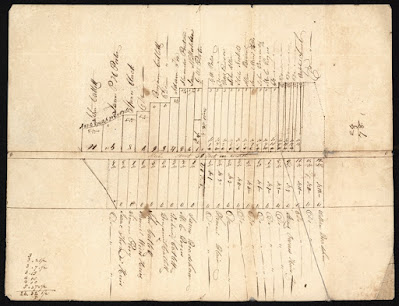
The 1,000th map in our collection is this plat of Sevierville, possibly the oldest existing map of the town, drawn between 1818 and 1832. It denotes early lot owners and a Baptist church, most likely Forks of the River Baptist. See it online.


Among our most recent additions is this map showing farms and landowners from the 1850s in the area that would largely become the Great Smoky Mountains National Park. You might recognize the Smokies landmarks such as Chimney Tops and Sugarland Mountain. See it online.


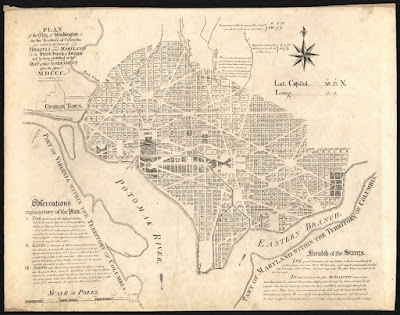
While our collections naturally focus on Tennessee geography, our maps span the globe. One such gem is Andrew Ellicott’s original layout for Washington D. C., which he copied from Pierre L’Enfant’s plan. See it online.


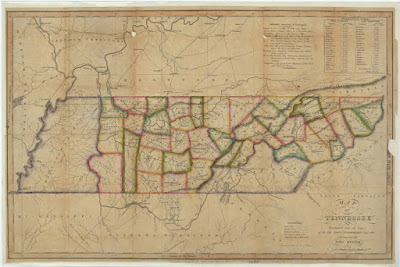
Among the first maps uploaded as part of the initial collection launch in December 2014 was this 1818 map of Tennessee by cartographer John Melish. See it online.


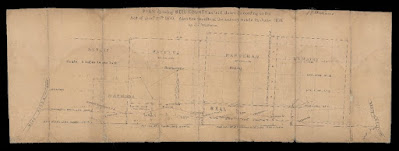
Our maps represent each of Tennessee’s 95 counties and the state’s “lost counties,” like this one of Bell County, which was sued out of existence. See it online. For more on Bell County, see our blog post here.


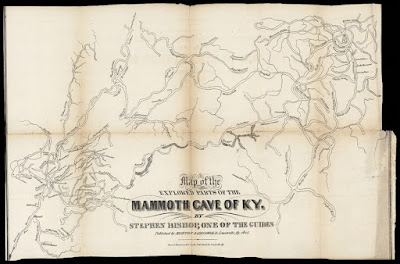
This map of Mammoth Cave was drawn by formerly enslaved guide and explorer Stephen Bishop. See it online.


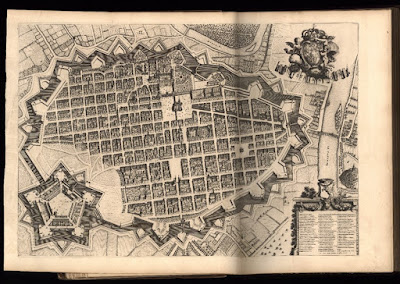
Our oldest scanned map, published in 1700, is this representation of Turin that appeared in an atlas boasting the Duke of Savoy’s realm. See it online.


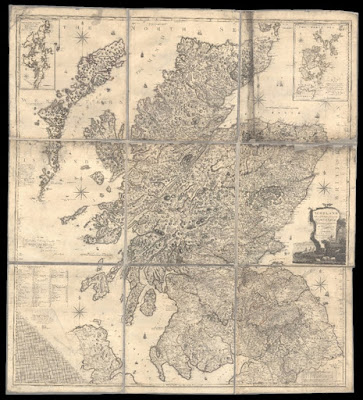
Among our largest digitized maps is this massive view of Scotland drawn by Scottish cartographer John Ainslie in 1800. It is roughly 5.5 feet by 6 feet! See it online.


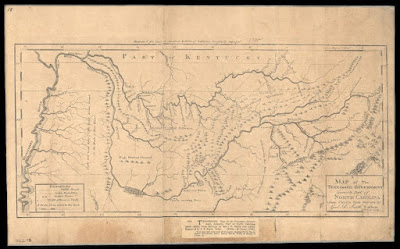
We have the first map ever published of Tennessee as a state, drawn by Territorial Secretary Daniel Smith in 1795. See it online.


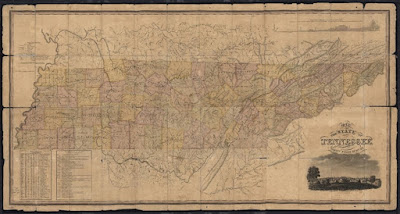
This map drawn by Matthew Rhea in 1832 is the best overall map of Tennessee in the early national period. In addition, we have preserved the hand-drawn county-level maps he used to make his masterpiece. See it online.


The Library & Archives holds the oldest existing map of Nashville’s city lots, drawn in 1789 by surveyor Thomas Molloy. See it online.


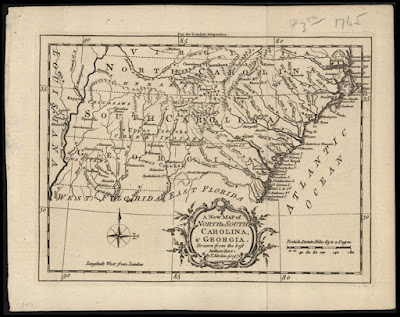
This 1765 map identifies the Tennessee River as the “Hogoheegee,” an early Cherokee name for the waterway, and the Clinch River in East Tennessee as the “Pelisipi.” These Native names predate colonization in the area and demonstrate that the Cherokee still maintained dominance in the region. See it online.


Please visit the Tennessee Virtual Archive to see these and literally more than a thousand other maps. Newly digitized maps are added to the collection each month. 


The Tennessee State Library & Archives is a division of the Office of Tennessee Secretary of State Tre Hargett.