Showing posts with label Century Farms. Show all posts

Friday, April 5, 2019

From a Circuit Rider’s Home to a Tennessee Century Farm: The Story and Legacy of Isaac Conger’s Beech Lawn Farm

By Dr. Kevin Cason

During the early 1800s, Tennessee was still in its early stages of development. As people began to establish new communities and lives in the newly created state, religious denominations began to filter into the new frontier. For Methodists, the most effective way to grow the denomination and establish new members was to have circuit riders who traveled to different places to preach. The system of having circuits was ideally suited for Tennessee’s scattered population during the 1800s. A circuit involved as much as 500 miles and took five to six weeks for a minister to cover. The services were held in a variety of places including cabins, sheds, taverns, and even in the outdoors under trees.

Circuit Rider, Harper's Weekly, October 1867.


One of these circuit riders was Isaac Conger who established a homestead in present day Lincoln County in the 1800s. At the time Isaac obtained the land grant for his property in 1808, the land was still part of Bedford County, Tennessee. After obtaining the initial 152.5 acres of land, Conger continued to obtain more land adjacent to the property. According to land grant records, from 1818 through 1827, Conger gradually purchased land and eventually accumulated 1,000 acres. Initially, Conger built a small stone cabin on the property as a place of residence. However, he soon turned his attention to building a two-story Federal style brick house for his wife and family.

Isaac Conger Land Grant, Book Y, page 484, Grant #1905
Record Group 50, Land Grants, Tennessee State Library and Archives


While he was busy with his farm and building his house, Conger also served as a Methodist circuit rider. Conger’s circuit included rounds through Lincoln, Bedford, Moore and Coffee counties in Tennessee. At the Tennessee State Library and Archives, Isaac Conger’s diary provides his personal thoughts and experiences as a circuit rider preaching the gospel to various communities while also enduring long travels and different types of weather.
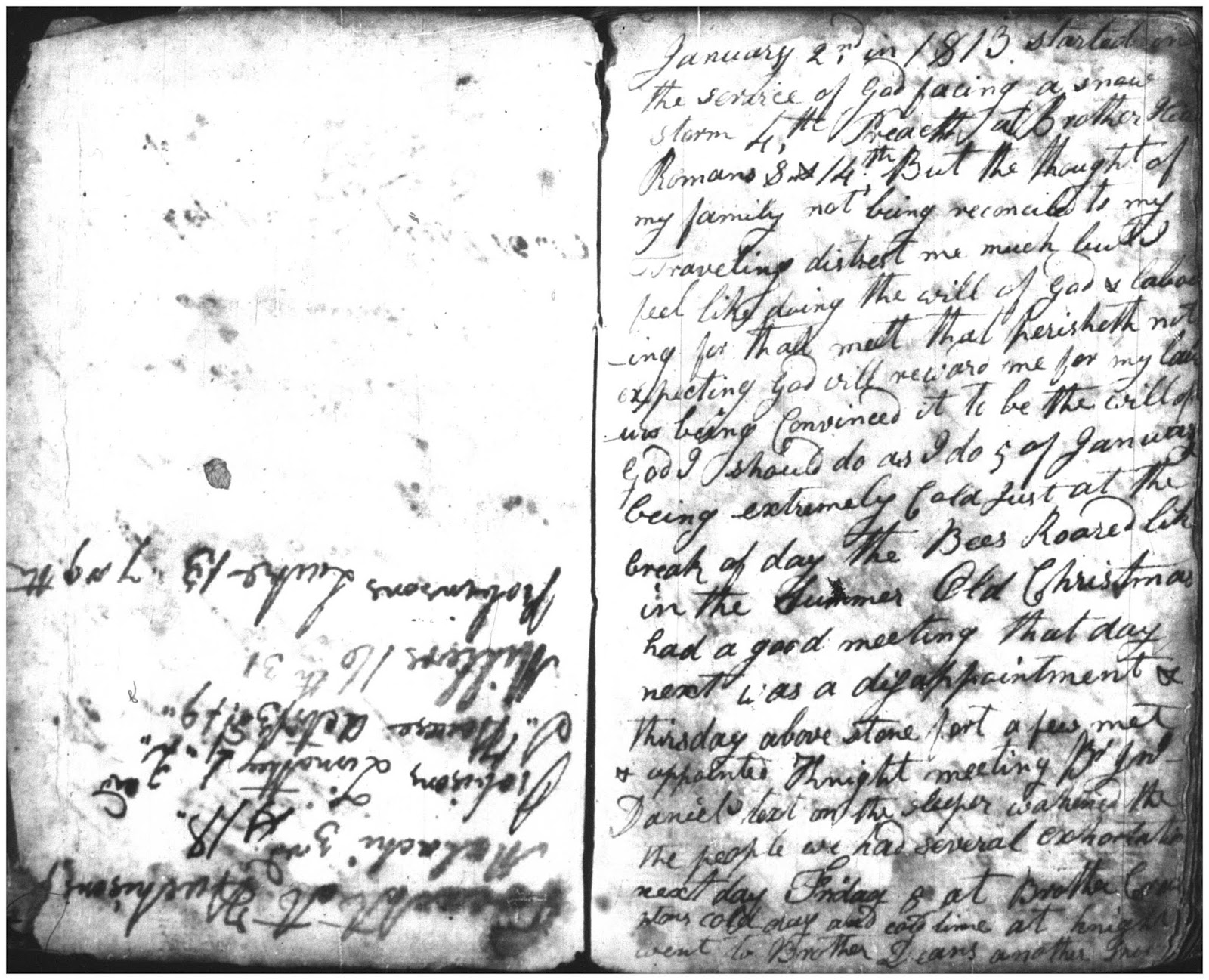
Isaac Conger Diary, 1813, page 1.
Tennessee State Library and Archives


As a result of the circuit riders like Isaac Conger, the Methodist movement grew and many churches were established in Tennessee. Eventually, William McKendree, Bishop of the Western Conference of the Methodist Church, and Francis Asbury devised a plan to make a general governing organization in Tennessee. In 1812, they officially created the Tennessee Conference of Methodists.

As time moved along, the legacy of Isaac Conger continued as his land, farm and house were passed through several generations. The founders’ only surviving child, Sion Moores Conger, inherited the farm in 1847. In the 1880s, two of Sion’s sons, Dixie and Charles bought out the farm’s heirs and created a stock farm of selling mules, cattle, sheep and hogs. In 1911, Charles died and Dixie continued the farm. In 1929, Dixie’s son John Beall Conger joined him as partner. The father and son continued to work the land together until Dixie’s death in 1953. After Dixie’s death, John Beall Conger continued to manage and live on the farm.

During the 1970s, the farm and homestead received other notable recognitions. In 1973, the “Isaac Conger House” was listed on the National Register of Historic Places for its architectural significance and for its historical connection to Isaac Conger. In 1976, the farm received another distinction by becoming an official Tennessee Century Farm. This program honors farms that have remained in the same family and have had continuous agricultural production for 100 years or more. The “Family Land Heritage-Century Farms” program was established by the Tennessee Department of Agriculture as a way to celebrate the nation’s bicentennial in 1976. Farmers were asked to fill out applications that told the history of their farm and provide documentation that proved the continuous ownership of their farm. In 1979, the 637 farm files that included the Conger’s Beech Lawn Farm were loaned from the Tennessee Department of Agriculture to the Tennessee State Library and Archives for microfilming. Eventually, the microfilmed files became State Record Group 62 and part of the Library and Archives microfilm collection.

Beech Lawn Farm, Lincoln County.
Record Group 62, Tennessee Century Farms Microfilm Collection. Tennessee State Library and Archives


Today, the farm that was established by Isaac Conger continues to remain in the family and serves as a reminder of the important agricultural legacy of farm families who have continuously owned and farmed their land for at least 100 years. The farmhouse that was built by Isaac Conger also serves as a significant historical landmark for a notable figure that felt a calling to spread the religious word to people in frontier Tennessee.

Isaac Conger House present day view on Beech Lawn Farm, Lincoln County, Tennessee.
Clipping from Conger Vertical File. Tennessee State Library and Archives


For more related to this topic see:


  • Isaac Conger Diary, Tennessee State Library and Archives.
  • Herman A. Norton, Religion in Tennessee, 1777-1945 (Knoxville: University of Tennessee Press, 1981).
  • Carroll Van West, Tennessee Agriculture: A Century Farms Perspective. Nashville: Department of Agriculture, 1986.


The Tennessee State Library and Archives is a division of the Office of Tennessee Secretary of State Tre Hargett

Tuesday, August 29, 2017

Remembering and Celebrating a Rural Heritage: The Tennessee Century Farms Program

By Dr. Kevin Cason

The popular 1960s television comedy Green Acres introduced viewers to New York lawyer Oliver Wendell Douglas who longed for a simpler way of life. As a result, he purchased a farm and moved there to live off the land, despite the opposition of his socialite wife Lisa. To express his appreciation of the rural life Douglas declared in the opening theme song: “Green Acres is the place to be. Farm living is the life for me. Land spreading out, so far and wide. Keep Manhattan, just give me that countryside!” While the song provided a memorable tune for television viewers, the love of the countryside and farm living is something that still resonates with people. For many Tennesseans and other Americans farming has been an important part of their lives.

One program that recognizes this rural heritage is the Tennessee Century Farms program. The Tennessee Century Farms program honors farms that have remained in the same family and have had continuous agricultural production for 100 years or more. The Tennessee Department of Agriculture established the “Family Land Heritage-Century Farms” program as a way to celebrate the nation’s bicentennial in 1976. To gain recognition as a Century Farm, farmers filled out applications that told the history of their farm and provided documentation proving continuous ownership. A county agent or county historian then certified their application. After officially certifying the farms, special ceremonies were held at regional, county and state fairs to recognize the Century Farms where farm families received a certificate and a plaque. In 1979, the Tennessee Department of Agriculture loaned 637 farm files to the Tennessee State Library and Archives for microfilming. Eventually, the microfilmed files became State Record Group 62 and part of the Library and Archives microfilm collection.

Cartwright-Russell Farm, Smith County, Record Group 62, Tennessee Century Farms Microfilm Collection.


In 1984, the Tennessee Department of Agriculture asked the Center for Historic Preservation at Middle Tennessee State University to administer the program and maintain the Tennessee Century Farms collection of applications and photographs. Under the guidance of staff at the Center for Historic Preservation, more farms have been added to the collection each year. Over the years, the Center has produced publications, exhibits, and a website to recognize the program.

Commissioner of Agriculture Edward S. Porter with Century Farms certificate and sign, October 1976. Tennessee Market Bulletin, Vol. XLIX, No. 10


Today, people can still apply to be a part of the Tennessee Century Farms program. In order to apply for the Century Farms designation, a person must fill out an application that is provided by the Center for Historic Preservation. In addition, the person must have documentation that shows the continuous ownership of the farm within their family for at least 100 years. Another requirement is the farm must be 10 acres or more of the original farm owned by the founder. The farm also has to produce at least $1,000 in revenue annually. The application then has to be certified by either the county agent or the county historian. On review of the application, the Center for Historic Preservation issues a letter and certificate officially designating the property as a Tennessee Century Farm. In addition, the Tennessee Department of Agriculture issues a yellow outdoor sign to further distinguish the family farm.

Townsend Farm Landscape Scene, Giles County, Record Group 62, Tennessee Century Farms Microfilm Collection.


Across Tennessee, the yellow metal Century Farm signs can be seen prominently displayed on many rural landscapes and historic buildings. The signs serve as a reminder of the important agricultural legacy of farm families who have continuously owned and farmed their land for at least 100 years.

For more on the Tennessee Century Farms Program see:

  • The Tennessee Century Farms website: http://www.tncenturyfarms.org/
  • “Family Land Heritage-Century Farms Collection, 1975-1978.” Record Group 62, Tennessee State Library and Archives. (Microfilm only collection).
  • Carroll Van West, Tennessee Agriculture: A Century Farms Perspective. Nashville: Department of Agriculture, 1986.
  • Caneta Skelley Hankins and Michael Thomas Gavin, Plowshares and Swords: Tennessee Farm Families Tell Civil War Stories. Murfreesboro, TN: Center for Historic Preservation, 2013.

The Tennessee State Library and Archives is a division of the Office of Tennessee Secretary of State Tre Hargett